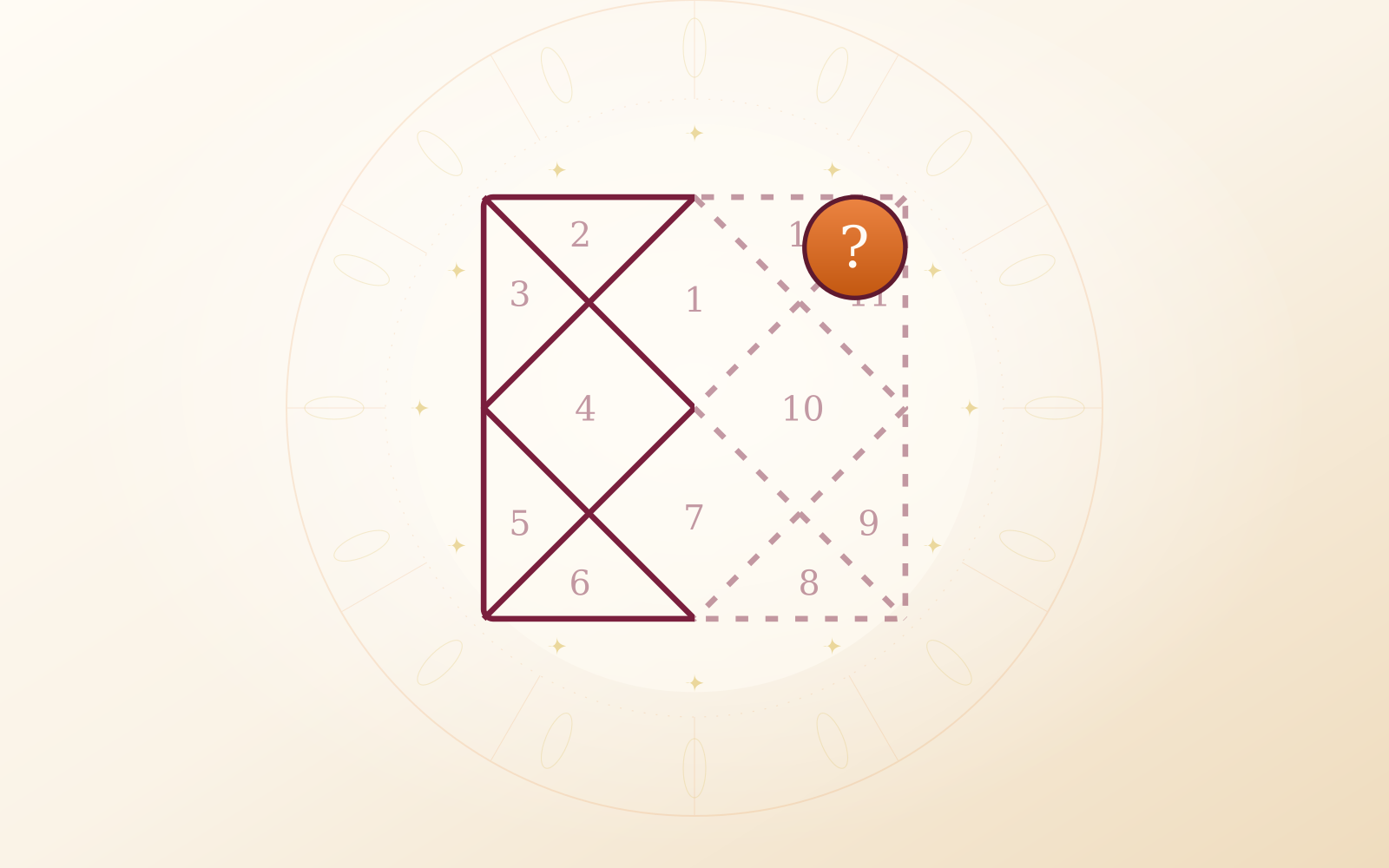
A birth chart maps tendency and timing. It does not hand you a fixed script, and any astrologer who claims otherwise is overreaching.
People often arrive expecting a verdict. They want to be told what will happen and when, in the way a timetable tells you when a train departs. A kundli does not work that way, and it is worth being clear about this before any consultation begins.
What the chart genuinely shows
A birth chart is a map of tendency. It shows where your natural strengths sit, which areas of life will demand more of you, and — through the dasha system — the rhythm in which those themes come forward. Someone running a difficult Shani period is not being punished; they are in a phase that rewards patience and steady effort rather than speed.
What it does not show
It does not show the choices you will make. Two people with strikingly similar charts can live very different lives, because the chart describes the terrain, not the route you take across it. This is why classical texts pair every prediction with a remedy: the tradition itself assumes you can act.
How to use a reading well
Come with a specific question rather than asking for everything at once. Bring accurate birth details, particularly the time. And treat the reading as information for a decision you are making, not as a substitute for making it.
More from the kendra
 Text / Article
Teachings
Text / Article
Teachings
Choosing a gemstone: why the wrong stone is worse than none
A gemstone strengthens a planet. If that planet is already causing difficulty in your chart, strengthening it makes matters worse.
Read more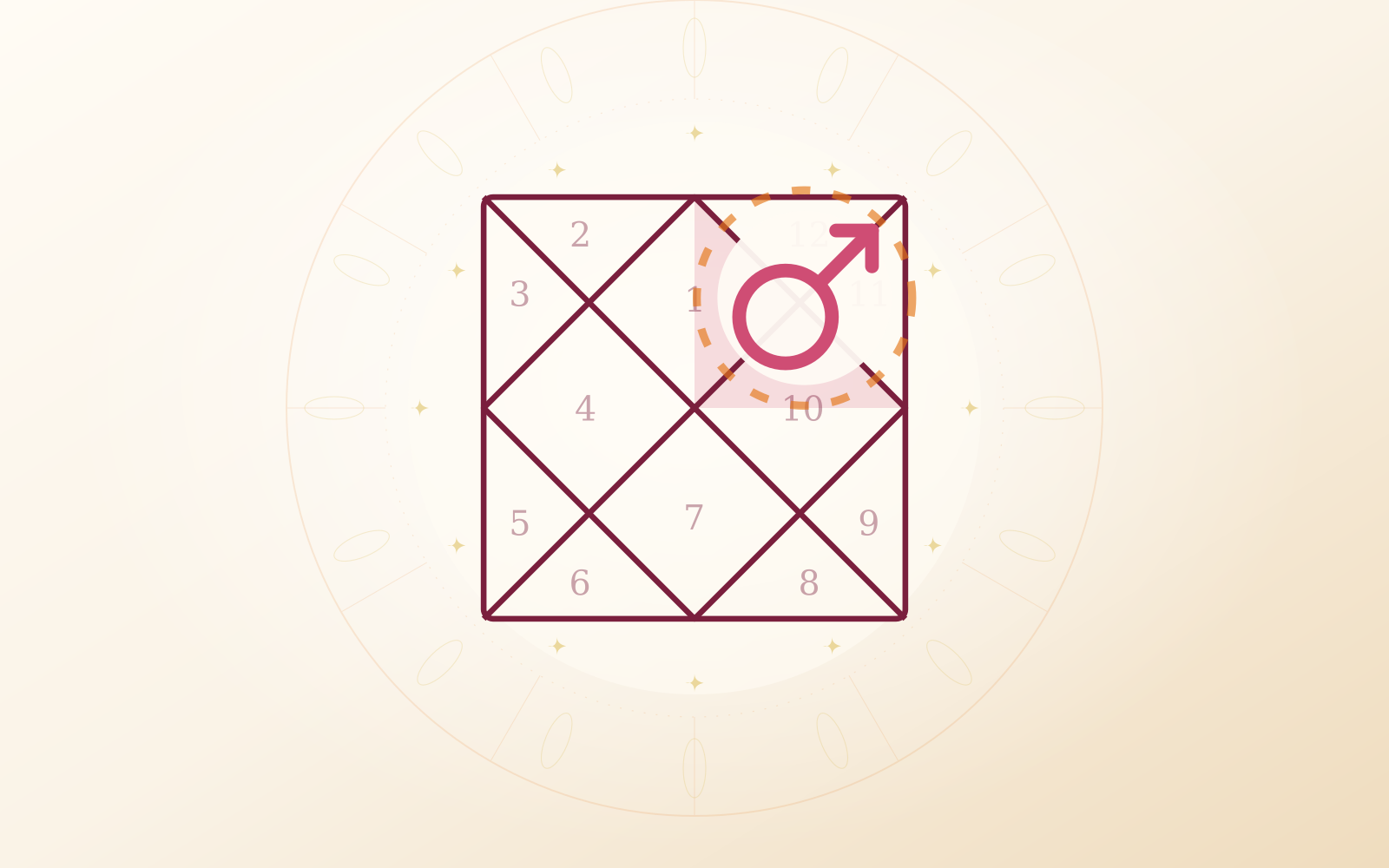 Text / Article
Teachings
Text / Article
Teachings
Understanding mangal dosha and its cancellations
Mangal dosha frightens more families than it should. The classical texts list several conditions under which it does not apply at all.
Read more Image Post
Festivals
Image Post
Festivals
Guru Purnima observance at the kendra
Devotees gathered for the morning aarti and paath, followed by prasad distribution.
Read more